
Portugal job board comparison: local job sites, hiring rules and CV strategy
A practical Portugal job-board guide covering local platforms, recruiter channels, CV privacy, cover letters and platform-specific application strategy.
Portugal job search is not just a list of links. Portugal's job market combines IEFP public routes, large local job boards and a strong international tech and tourism layer. Lisbon and Porto dominate many searches, but tourism regions, remote roles and EU mobility routes need separate targeting.
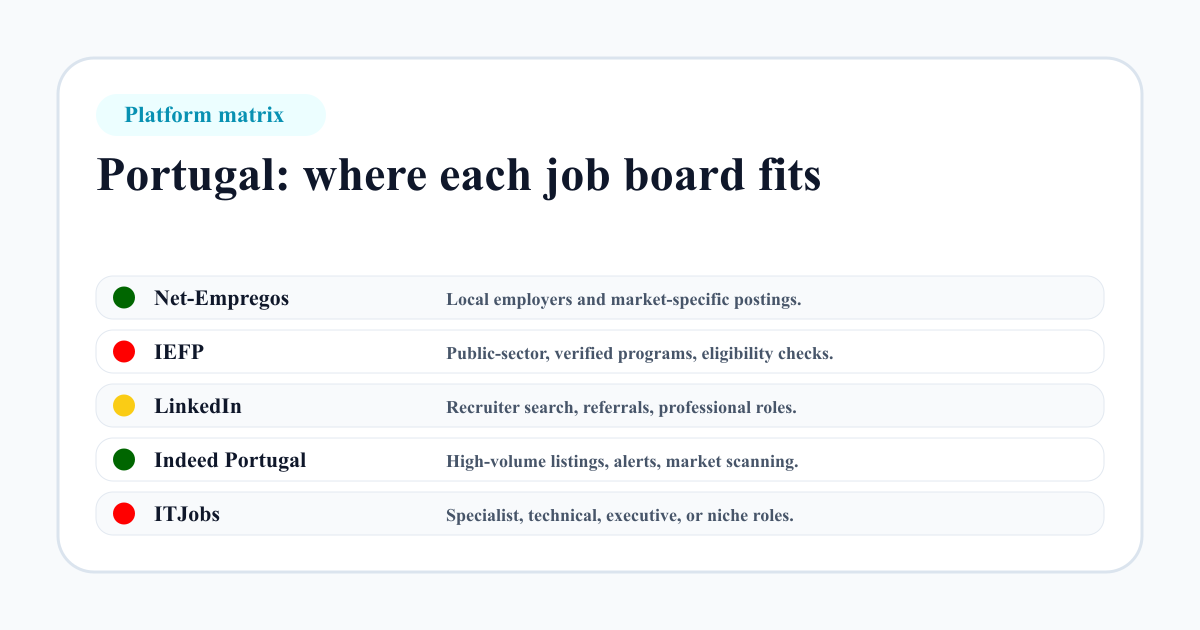
Portugal job search in one minute
| Hiring lane | Use it for | CV angle |
|---|---|---|
| Public employment and local roles | IEFP / iefponline | Use it for formal routes, local support and public options. |
| Lisbon and Porto professional jobs | Net-Empregos | Verify employer websites before sending sensitive data. |
| Tech, remote and startup roles | ITJobs | Lead with stack, product, English level and EU work-right status. |
| Tourism and hospitality roles | Landing.jobs | Prepare an English tech resume plus a Portuguese local CV version. |
What makes Portugal different
Portugal roles should not be searched with one generic workflow. Public employment and local roles, Lisbon and Porto professional jobs, Tech, remote and startup roles, Tourism and hospitality roles use different channels, screening signals and document expectations. Treating each lane separately helps the application look researched rather than copied.
Platform-by-platform comparison
| Platform | Best use | Watch-outs | CV and application tip |
|---|---|---|---|
| IEFP / iefponline | Public employment service and official job-bank route. | Some processes require local registration or documentation. | Use it for formal routes, local support and public options. |
| Net-Empregos | Large general job board across Portugal. | Listing quality and employer details vary. | Verify employer websites before sending sensitive data. |
| ITJobs | Technology, software and IT roles in Portugal. | Stack, seniority and remote terms must be precise. | Lead with stack, product, English level and EU work-right status. |
| Landing.jobs | International tech and remote-friendly roles. | Compensation and remote eligibility can differ by employer. | Prepare an English tech resume plus a Portuguese local CV version. |
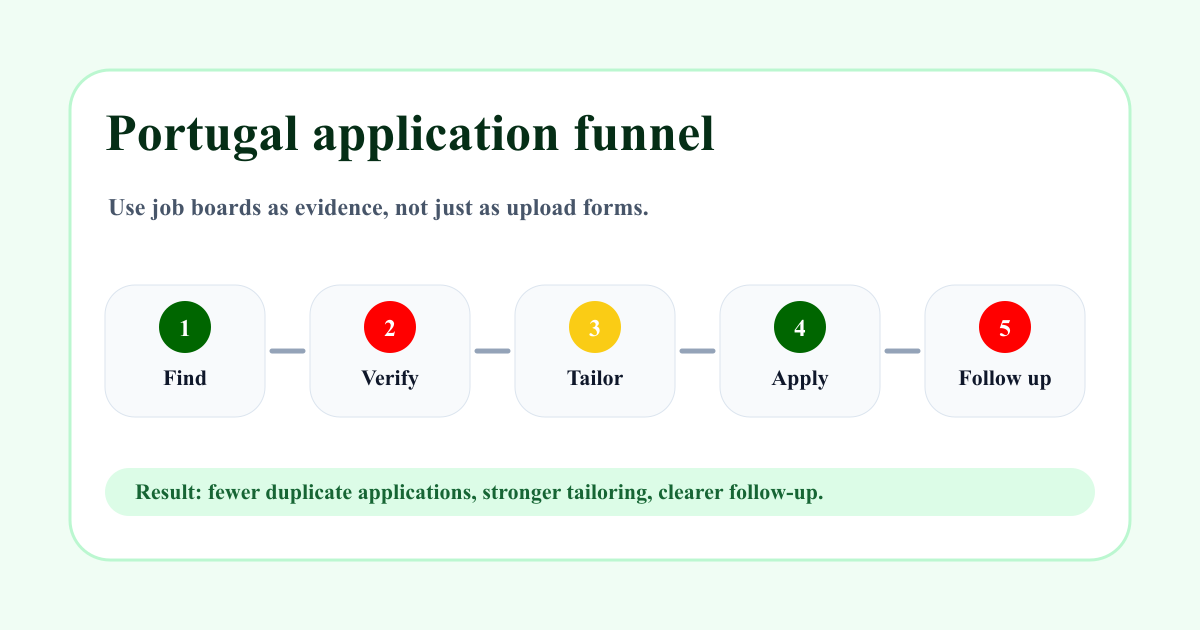
Local hiring rules and CV privacy
- Portuguese is safest for local roles; English works for tech, tourism and international companies.
- Do not include NIF, passport number or sensitive ID details in the CV.
- Cover letters are useful for relocation, tourism, public and senior roles.
- Make EU work rights, visa status and city preference easy to read.
Portugal CV localization checklist
| CV area | Recommended approach | Why it matters |
|---|---|---|
| Document name | CV or local equivalent, adapted to the language and sector used in the job advert. | Use the wording local recruiters expect. |
| Language | Follow the language of the advert and keep a second version when Portugal roles are split between local and international hiring. | Language choice affects keyword search and first screening. |
| Personal information | Keep contact details, city or region, LinkedIn or portfolio links. Avoid sensitive identifiers. | This protects privacy and keeps the CV usable across local and international employers. |
| Salary and work rights | Use local currency and work-right wording only where the advert or form asks for it. | Salary, visa and notice-period expectations are often screened before interview. |
| Cover letter | Not always required, but valuable for senior, public-sector, NGO, relocation, career-change and highly targeted applications. | A short letter can explain motivation, relocation, sector fit or career change. |
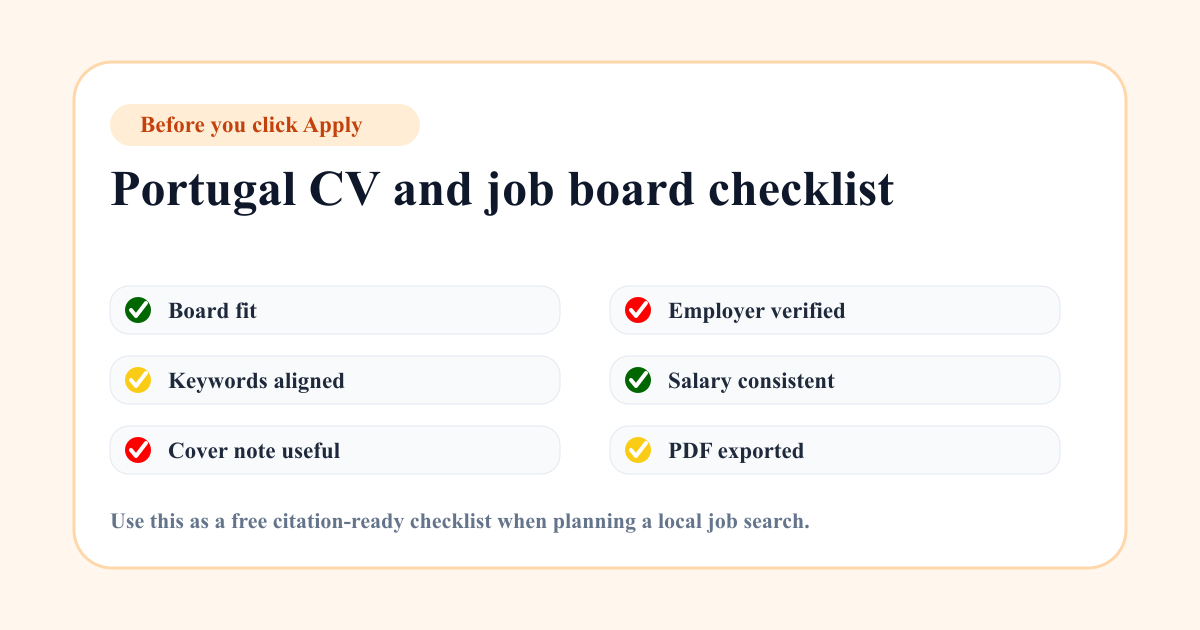
A practical 7-day application workflow
- Day 1: choose two priority lanes from the table above and save 20 representative job ads.
- Day 2: extract repeated job titles, skills, language requirements and location terms from those ads.
- Day 3: build one master CV and one tailored CV for the highest-value lane.
- Day 4: apply on the strongest local platform and verify priority roles on employer career pages.
- Day 5: update LinkedIn or the relevant portal profile so it uses the same keywords as the CV.
- Day 6: send targeted applications with a short cover letter where the sector expects it.
- Day 7: review replies, remove low-quality sources and double down on the two platforms producing real recruiter contact.